Video is the most powerful content format available to businesses right now. That’s not an opinion. It’s math.
People retain more from video than from text. Social media algorithms prioritize video over static posts. Websites with video keep visitors on the page longer. Email subject lines with “video” in them get opened more often.
If you’re not using video, you’re leaving attention on the table.
The good news is you don’t need a Hollywood budget to get started. The bad news is that “started” and “strategic” aren’t the same thing.
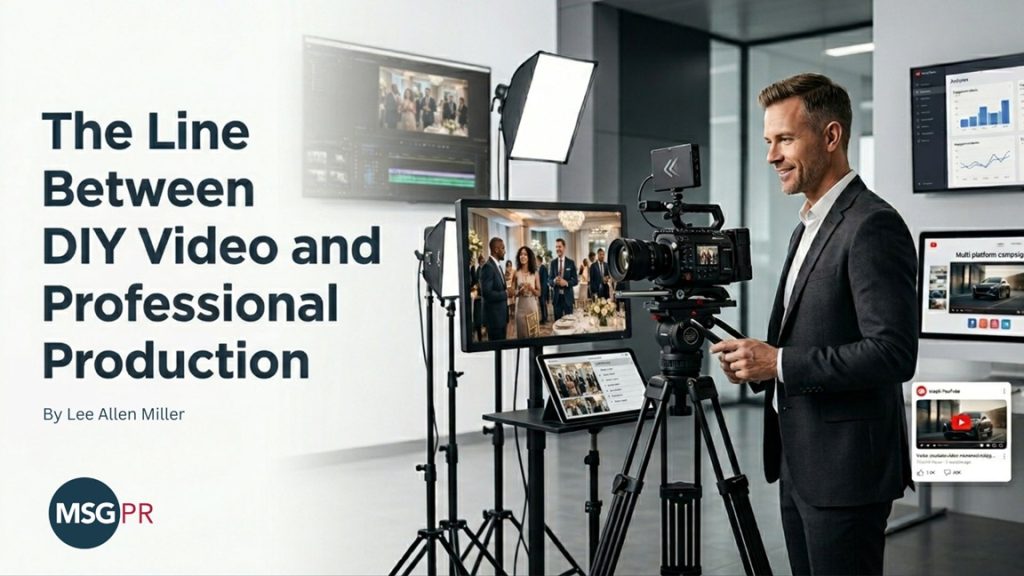
Here’s where the line is.
What You Can Shoot Yourself (And Should)
Your smartphone is more powerful than the professional cameras most businesses were using ten years ago. For certain types of content, it’s all you need.
Behind-the-scenes content. Walk-throughs of your office, your process, your day. These perform well on social media because they’re authentic. People want to see the real version of your business — not the polished, sanitized version. Grab your phone, hit record, and show them what a Tuesday looks like.
Quick tips and educational clips. Sixty seconds of you sharing one useful insight about your industry. No script needed — just talk the way you’d talk to a customer. These build authority over time and give your audience a reason to follow you.
Customer testimonials. Ask a happy customer if they’d mind saying a few words on camera. Keep it short. Keep it real. A genuine 30-second testimonial from an actual customer is worth more than any ad you could run.
Event recaps. If you’re at a trade show, a ribbon cutting, a community event — capture it. A few quick clips edited together with text overlays can turn a one-day event into a week of content.
For all of these, the production value doesn’t need to be high. It needs to be clear, steady, and well-lit. Here’s the basics.
Lighting. Face the light source. Natural window light is your best friend. Never shoot with a window behind you — that turns you into a silhouette.
Audio. This matters more than video quality. A $20 clip-on microphone will transform your sound quality. If people can’t hear you clearly, they leave.
Stability. Hold your phone horizontally for YouTube, vertically for Stories and Reels. Use a $15 tripod. Shaky footage feels amateur even when the content is great.
Editing. Free apps like CapCut or InShot let you trim clips, add text overlays, and drop in background music. You don’t need Final Cut Pro for Instagram content.
Where DIY Hits Its Ceiling
Everything above works for social media content — the casual, daily-rhythm kind of video that feeds your online presence.
But there’s a category of video where DIY doesn’t just fall short. It backfires.
Your homepage video. This is the first thing many potential customers see. If it looks like it was shot on a phone in your break room, it communicates something you don’t want it to: that your business isn’t ready for the big stage.
A homepage video needs professional lighting, audio, scripting, direction, editing, color grading, and music licensing. It needs to be strategically scripted — not a rambling introduction, but a tight, compelling narrative that tells a visitor exactly who you are, what you do, and why they should care. In 60 to 90 seconds.
Brand story videos. The video version of your origin story. Why you started. What you believe. Who you serve. This is the emotional centerpiece of your brand, and it needs to feel like it. Professional interviews. B-roll that actually matches the narrative. A soundtrack that sets the right tone. Graphics and lower thirds that reinforce your brand identity.
Commercials and ad campaigns. Paid media lives or dies on production quality. A poorly produced video ad doesn’t just waste your ad spend — it actively damages your brand. People associate production quality with business quality. Fair or not, that’s the reality.
Training and safety videos. If you’re producing content for internal use — onboarding, compliance, safety protocols — it needs to be clear, professional, and structured. These videos represent your company to your own team. They set expectations. They need to meet them.
Case study and testimonial packages. A quick phone testimonial works for social. But a full case study video — with interviews, data visualization, project footage, and a narrative arc — is a sales tool. It lives on your website, gets sent to prospects, and shows up in pitch decks. This isn’t casual content. It’s collateral.
The Line Is Simple
If the video is for your social feed and your existing audience — shoot it yourself. Keep it real, keep it frequent, keep it human.
If the video represents your brand to someone who’s never heard of you — invest in professional production. That’s the content that closes deals, wins trust, and positions your business as the real thing.
DIY video works for social. But when the stakes are higher — your homepage, a pitch, a campaign — you need production that matches your ambition. Talk to MSGPR about video that moves the needle. 936-637-7593.